Fuck! ChatGPT Really Is Ruining Writing (And I Told You So)!
— 9 min read
Two years ago, I tweeted this:
And whaddya know, I was right. ChatGPT written words have so infiltrated human writing that what was once considered polished, professional writing is now seen as suspicious and low-status. People are becoming increasingly sensitive to anything with a whiff of the machine. The latest victim is the em dash "—":
Boom. Called it.
Look, I love me an em dash—they’re great for adding in interesting aside, saying your truth, or just breaking up the monotony—but it’s probably already too late to save them. It's language guilt by association. Doesn’t matter if you love them, doesn’t matter if they are useful, ChatGPT loves them too damn much and now they gotta go.
A Growing Pile of Bodies
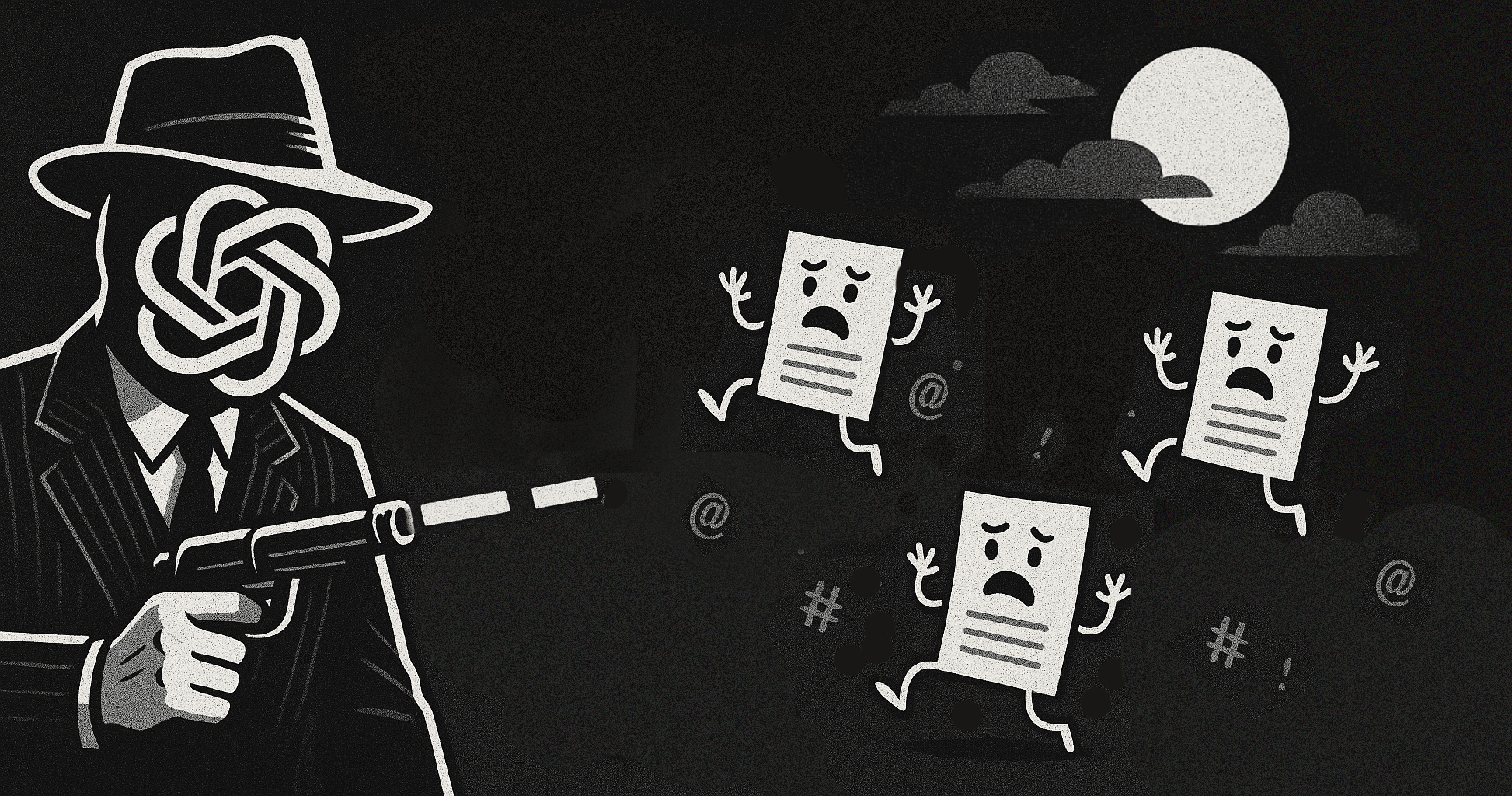
The Em Dash is soon to join a growing list of English idioms, punction, and syles murdered by the machines. “Delve” is the first AI tell that I can recall. Unobjectionable, but rarely used, “delve” was a favorite of early versions of ChatGPT so much that it became an instant calling card.
“Tapestry” is another casualty. One editor told Forbes, “I no longer believe there’s a way to innocently use the word ‘tapestry’ in an essay; if the word ‘tapestry’ appears, it was generated by ChatGPT.”
Another casualty has been emojis. Previously, they were a whimsical addition to text messages, the domain of teenagers, and a form of spice in informal writing. They were tolerable in listicles, which despite being written by humans before ChatGPT somehow anticipated a lot of its inhuman flavor. Now? Using a bunch of emojis is a confession that you made a machine write your stuff.
An emerging victim is bullet points. They are such a mainstay that I pretty much start every AI chat with “Don’t use bullet points”. Used by human or machine, they are annoying and just feel lazy. Their deceiving promise is that they will save the time of both the writer and the reader but no one really loves reading a PowerPoint presentation.
My wife works in marketing. I asked her how ChatGPT has changed how they write copy. She said her rules to team members are “2-3 paragraphs, professional tone, no emojis or bullets.” Bingo. When I asked her about the Em dash, her response may have well been a eulogy. She takes them out of all copy regardless of whether it’s written by human or AI. Better to rewrite than risk the perception that the copy was judged the most statistically likely.
Telling the Protocol Droid to Shut Up
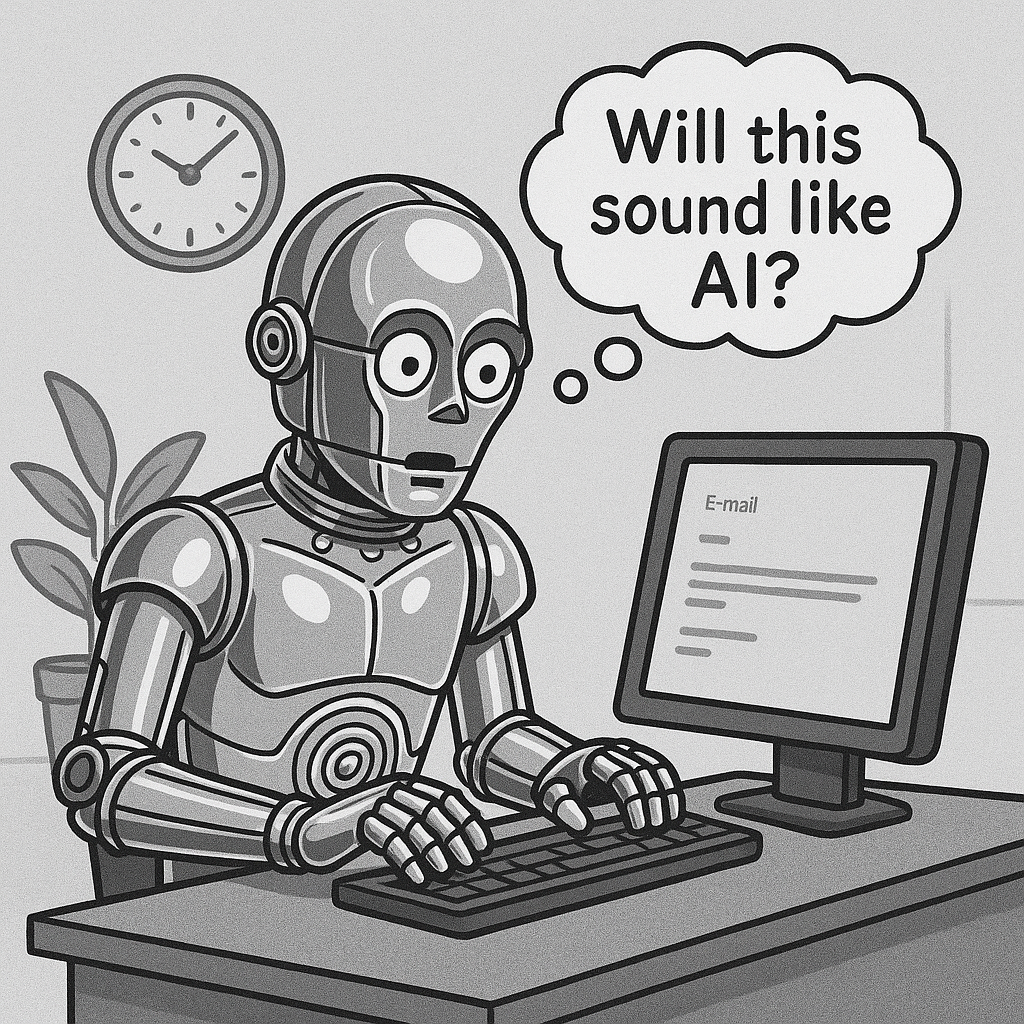
One of my favorite jokes in Star Wars is how no one listens to the talking robot. It's not that C-3PO doesn't have anything useful to say, it's just that his whole shtick is annoying. A stickler for rules and process regardless of context is a bore. No wonder all the characters yell “Shut Up” at the droid when it starts reciting the odds or explaining protocols.
AI content is no different. No, I’m don’t want to “delve” into your “tapestry” of bullshit, thank you very friggin’ much.
But, like,
Why can’t we stand AI written content?
Is it a question of agency? Maybe knowing that a human with free will and consequences chose these specific words is what gives them weight. Or alternatively, maybe it’s because AI words feel cheap. If you are having a machine craft the message, then maybe you don’t value it, and if you don’t why should I?
Is it a question of status? When a chatbot can make anyone’s style have polish, polish loses it’s uniqueness, it loses its signalling ability. It’s no longer a useful way to show intelligence, catch attention, project authority, etc. If everyone can do it, it may be useful, but it lacks value.
Maybe it’s the polish. The Disneyland version of a thing never seems as good as the original. Too smooth, too inoffensive, too... perfect.
It occurs to me that we hate corporate writing for similar reasons. It tends to diffuse responsibility rather than concentrate it. Corporate language is even more machine-like than AI language. Corporations are struggling to integrate chatbots precisely because these AIs have a hilarious habit of doing something corporations hate: making up consumer-friendly policies. Just ask Air Canada, who refused to honor their chatbot's promise of humane retroactive bereavement fares because the bot was "mistaken." ChatGPT may be ruining writing but at least it’s not as ghoulish as our soulless corporations. I guess it just goes to show that matter how bad AI is… humans can still be worse.
Anyway, if we don’t like AI writing, and want to avoid it, what’s going to happen?
Human Writing must go where the ChatGPT cannot
When creating ChatGPT, OpenAI trained the bots with a lot of specific rules: be balanced, non-offensive, save, structured, and coherent. And by their construction chatbots prefer a certain kind of text: smooth, predictable, with a coherent flow. (The technical term is that large language models work best with text that has “low perplexity”, i.e., is smooth and predictable).
This training gives AI a recognizable voice. And for all the reasons mentioned, that voice will bore and repel human readers. The paradox is that we created AI to model our best writers, but now those things we demanded of AI will become the markers of what humans will avoid. It’s a linguistic uncanny valley, close enough to human to be recognizable, but different enough to be repulsive.
The coming evolution of our language, then, will likely mirror those things we demanded of AI. We will deliberately do things that AI can't or won't do. The better you can do it, the smarter and more human you will sound. That's the "clever informality" that I predicted will become high status.
I think this means we can look at what we’ve trained AI to do to see where our language will evolve:
| AI Alignment Feature | Human Opposite | Example |
|---|---|---|
| Balanced presentation | One-sided advocacy | "This proposal is garbage and everyone knows it." |
| Hedging language | Definitive claims | "Trust me, this approach will fail." vs "This approach might face challenges." |
| Refusal on ethical grounds | Willingness to engage taboos | "Here's how I would steal from my employer..." |
| Safety disclaimers | Raw, unqualified advice | "Just quit your job tomorrow. You'll figure it out." |
| Multiple perspectives | Single, strong viewpoint | "There's only one way to solve this problem." |
| Measured tone | Emotional language | "This policy is fucking insane." |
| General knowledge claims | Personal anecdotes with no data | "I once tried this and it was a disaster." |
| Formal structure | Stream of consciousness | jumping topics rapidly, incomplete sentences, unfinished thoughts, shit like that |
| Universal accessibility | Inside jokes/references | "This reminds me of that thing Dave did at the Christmas party." |
In all the places they don’t let ChatGPT go, that’s where we might best show our humanity.
Is this going to make us dumber?
Here's the problem: because AI writes so "well" (by certain academic or corporate standards), humans will deliberately write worse. We're not becoming dumber, really we're just trying to sound human in a world where we’ve taught rocks to think and speak.
As shown in the examples in that chart above, our writing is probably going to get rougher because smooth sounds fake. Language is utilitarian, never static. It will evolve to solve the challenges of the day. When machines can produce perfect essays and emails, perfect essays and emails become worthless signals of humanity. Informality will become necessary, and paradoxically, will become a formal requirement.
This has happened in other areas; a pattern of informality becoming formal over time isn't new. Blue jeans were once pure workwear, then became symbols of rebellion, and now are acceptable in most offices. The casual becomes formal, and new casual styles emerge.
So, whatever style sets us apart from the machines will eventually become the new standard, and will then be mimicked by AI, forcing future generations to find fresh ways to signal authenticity. So, I wouldn’t consider that dumbing down but rather a deliberate, even intelligent rejection of what can be mass-produced by algorithms. But man, we are all gonna sound so stupid.
All I know is that I was right
Look, I called it. AI is fucking up writing norms, and now we're all scrambling to sound human.
The em dash is dead. "Delve" is dead. Bullet points are suspect. All because ChatGPT loves that crap too much.
So what happens next? Messier, weirder, more abrupt writing, probably. As I joked about in my tweet, those f-bombs in business emails are coming. Shit, at this rate, Tourette's may be considered an unfair advantage in business writing by 2026. It's not about being ruder, but about being authentically human by breaking all of the norms the machines follow.
Want some unsolicited advice on navigating this mess? Here are “five key techniques” for not sucking ass like a robot:
- Use AI for the boring shit. First drafts, research summaries, whatever. Use it to start, then start throwing it out.
- Break patterns deliberately. If you notice three perfectly balanced paragraphs, make some changes.
- Cut transition phrases mercilessly. "Moreover" and "furthermore" scream robot.
- Trust your weird impulses. Being weird and strange still reads like a human.
- Indulge your ego. You can be confident, or insecure. Just don’t be neutral or boring.
So, You might as well write how you want. Break some rules. Or don't. Language evolves whether we like it or not. The robots will catch up regardless.
I was right about all of this, by the way. Did I mention that?